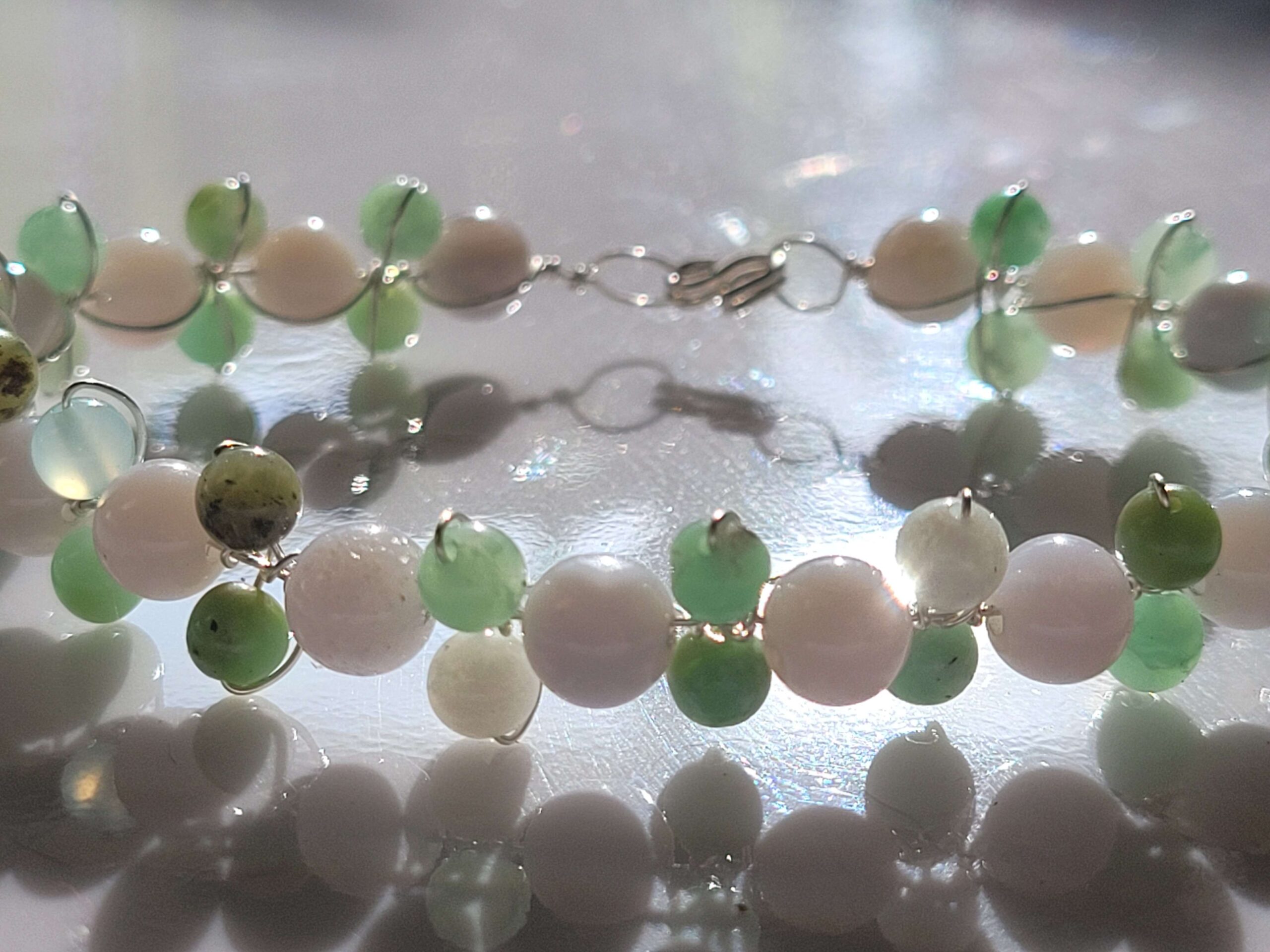
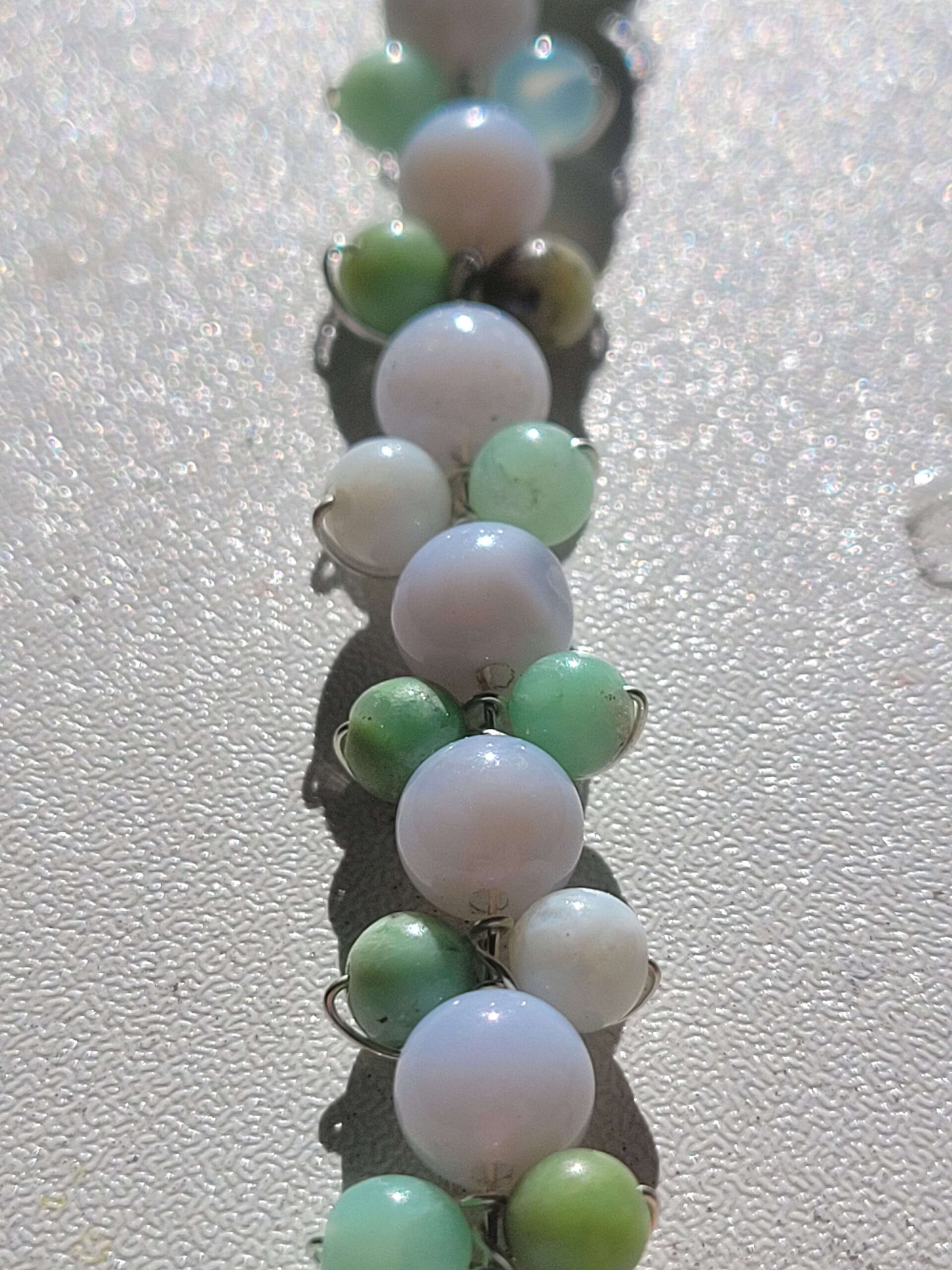
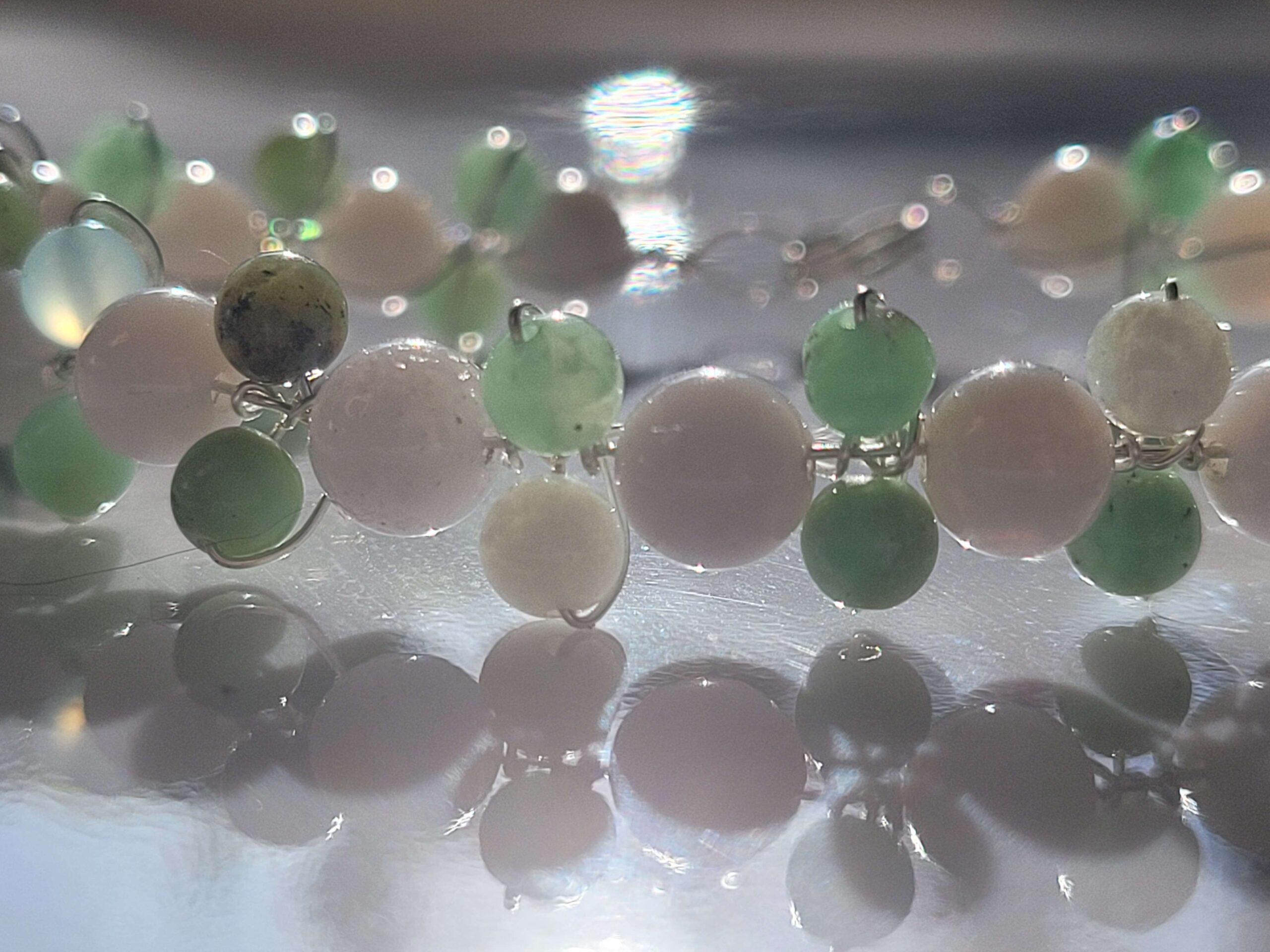
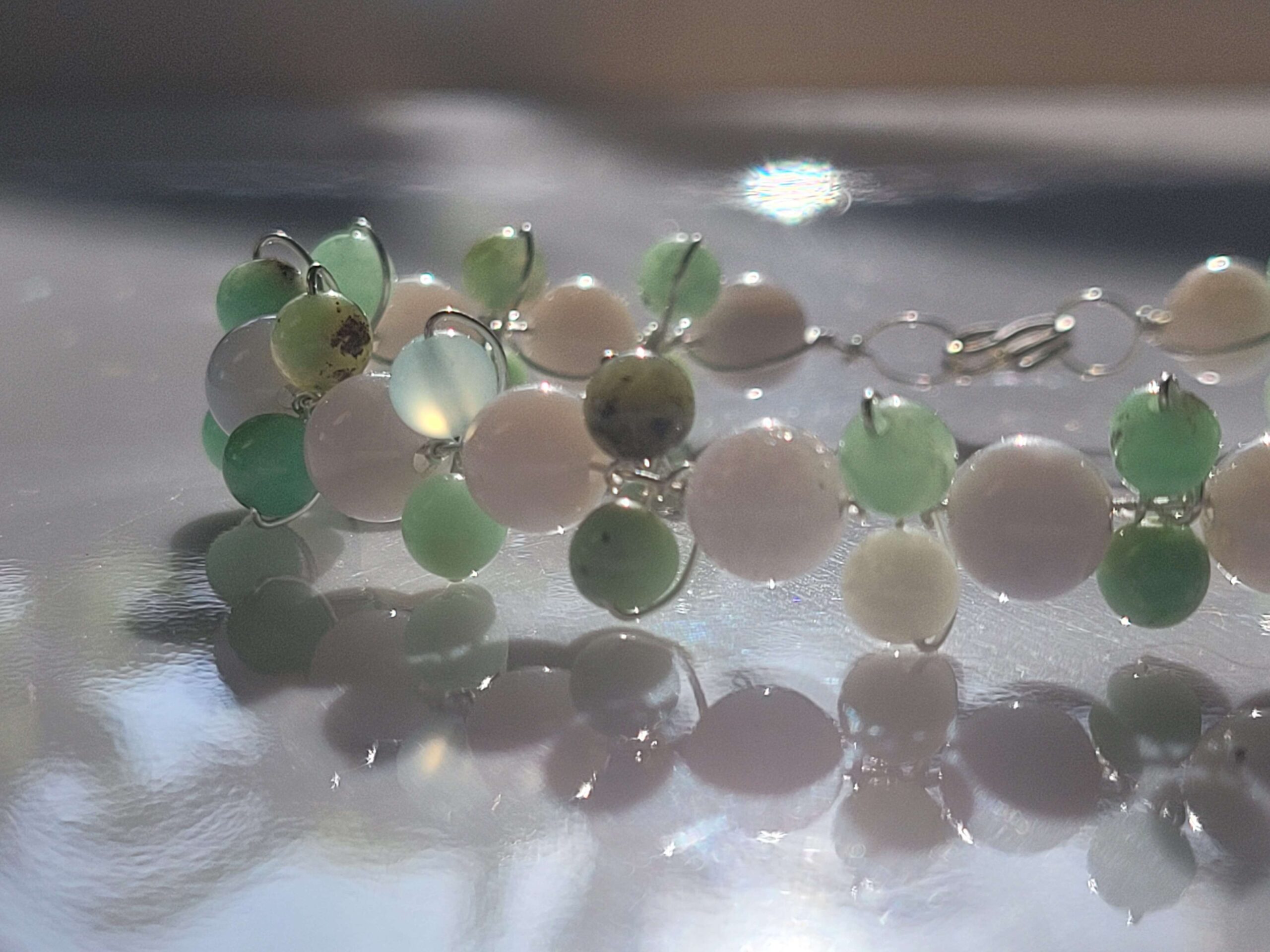
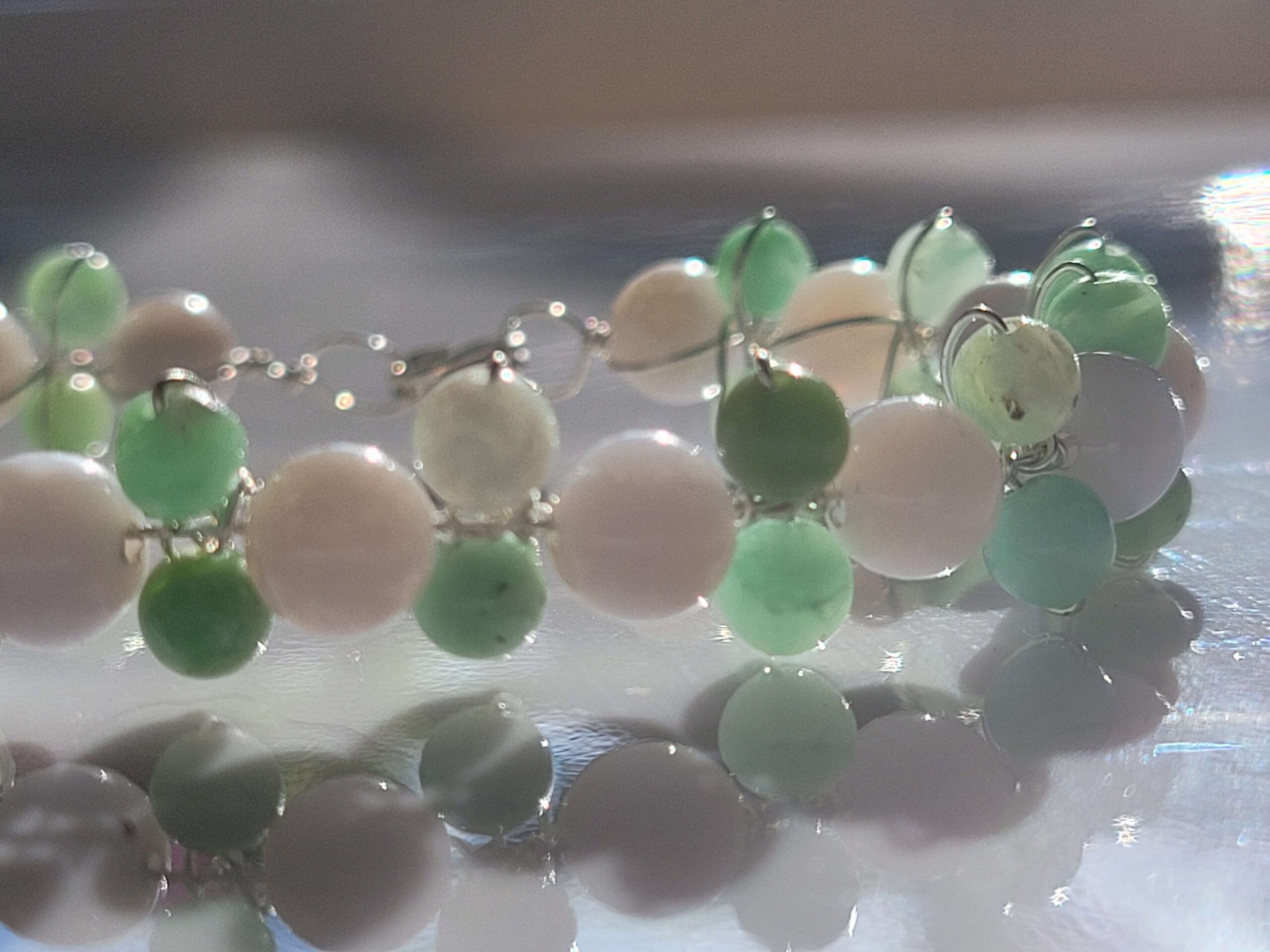
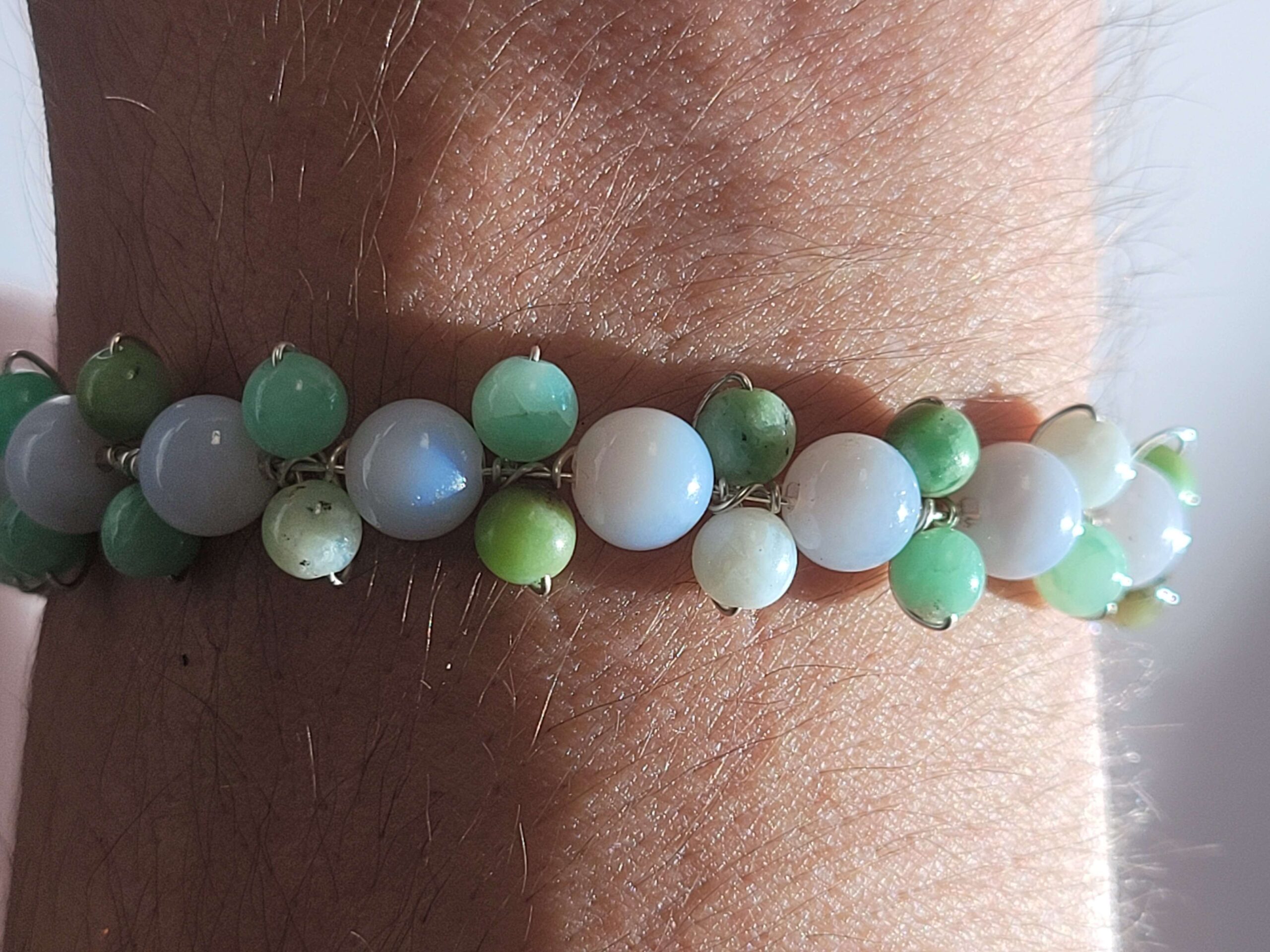
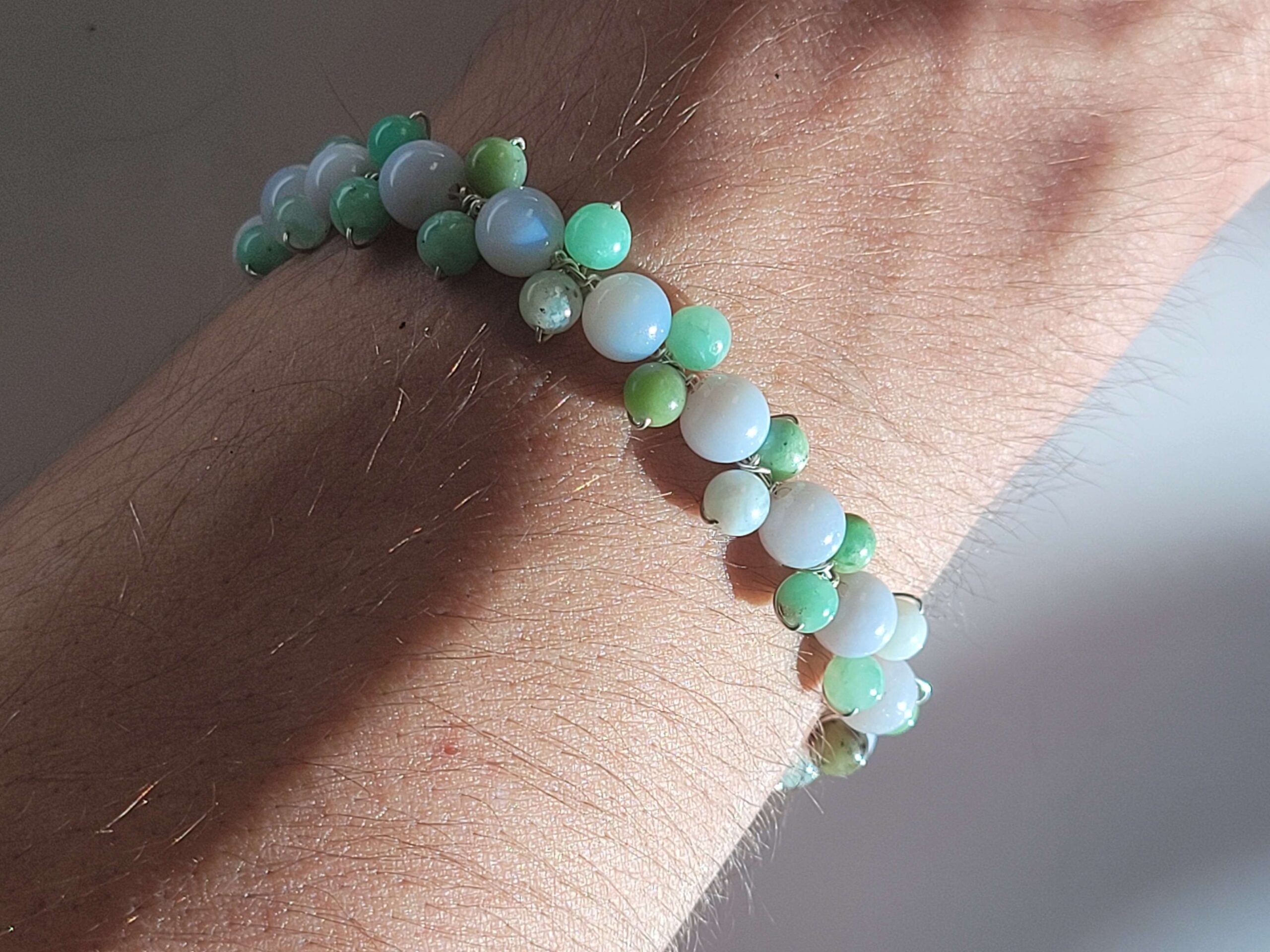
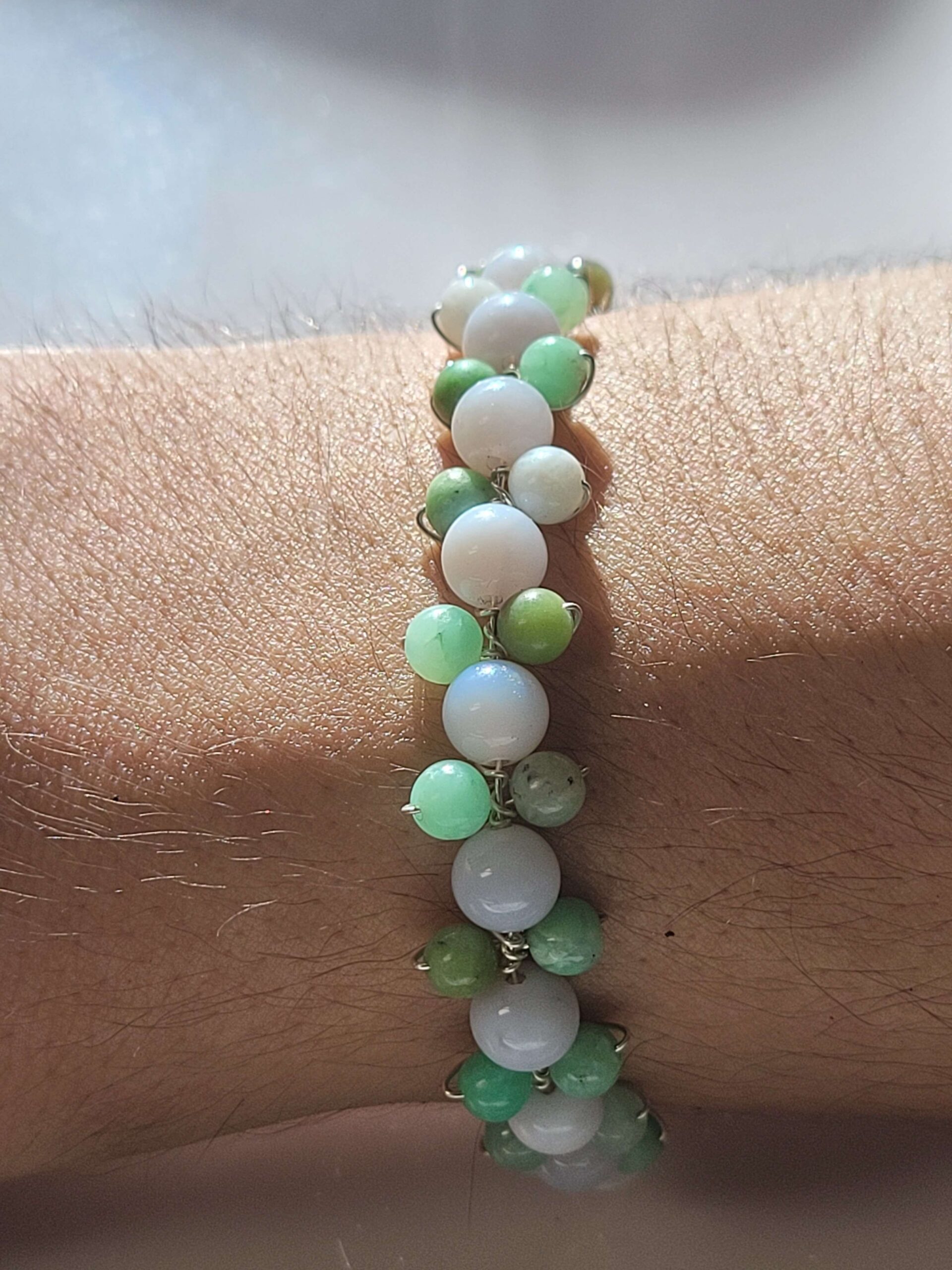
Description
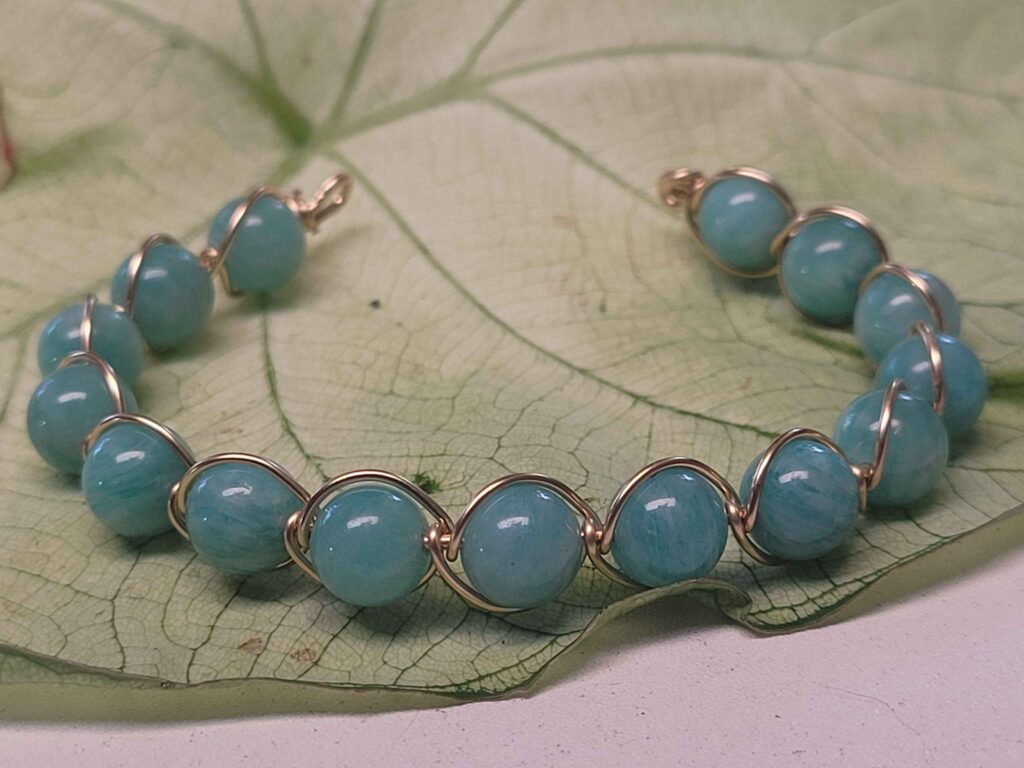
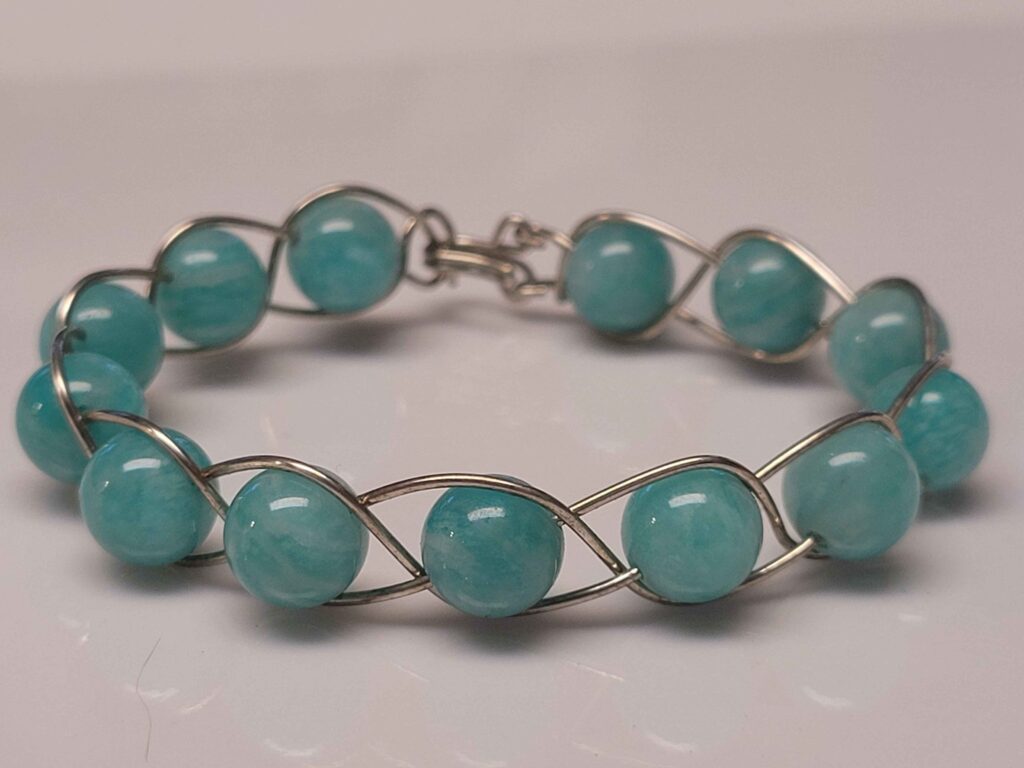
Chrysoprase is a cryptocrystalline quartz, meaning its crystals are so small that they are indistinguishable under normal magnification. The light apple, mint and deep green colors come from trace amounts of nickle present during the formation process. Chrysoprase takes it’s name from the Greek word ‘chrysos’, meaning gold, and ‘prasos’, meaning leek; the name Australian Jade in turn is due to that fact that most of the world’s chrysoprase is found in Australia. Discovered in Marlborough in the early 1900s and commercially mined since the 1960s, much of the material found in Marlborough found its way to the People’s Republic of China as a popular jade substitute; leading to the misnomer. Possesses a soft translucence and prized for its bright, even color and texture.
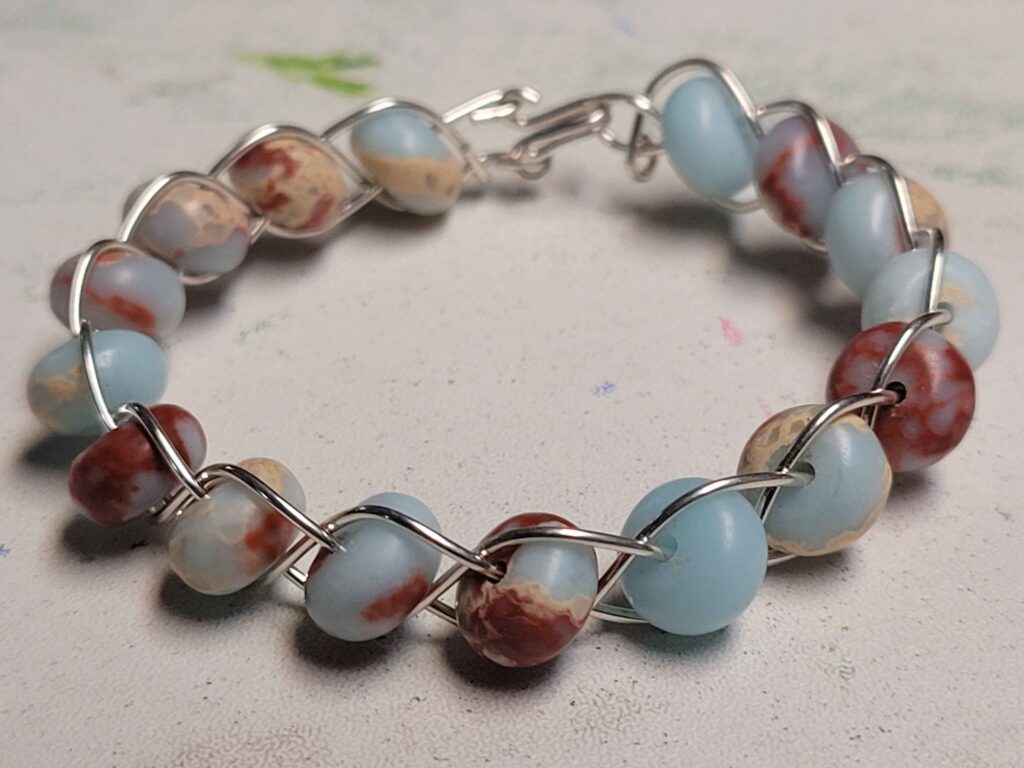
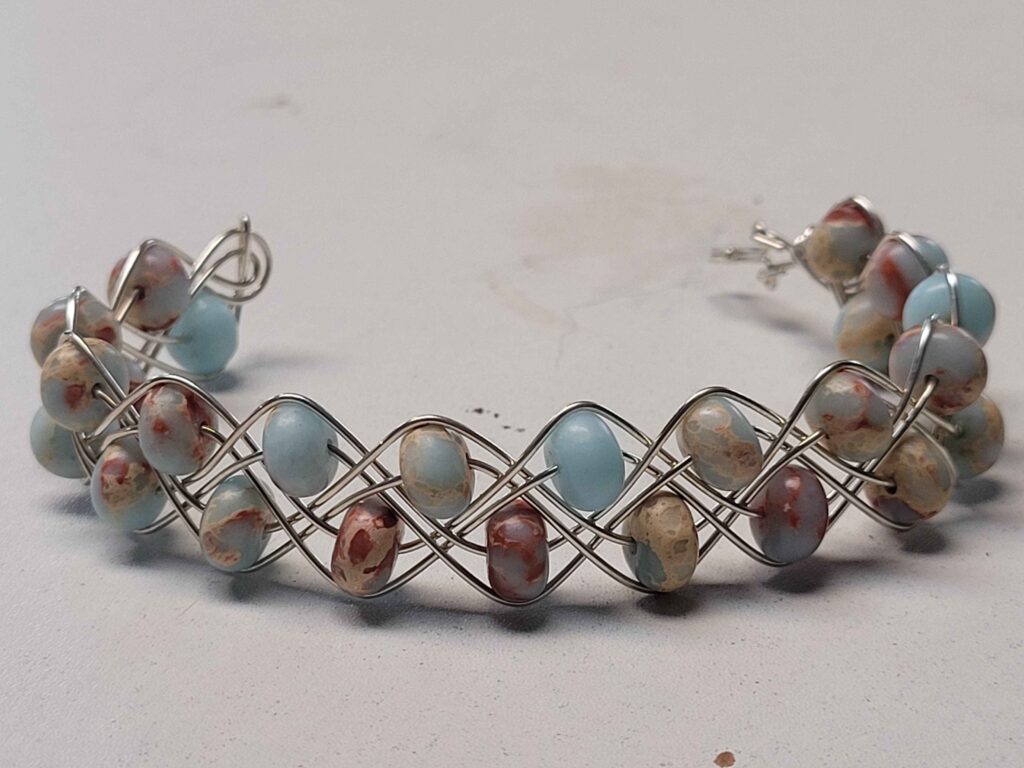
Discovered in Namibia, Blue Lace Agate is a variety of chalcedony, which are minerals that contain a microcrystalline structure and belong in the quartz family, that is known for its powder blue and white banded or lacy patterns that give it its distinct and attractive appearance. The soft blue color is attributed to the trace amounts of copper, manganese, and iron present in its chemical composition.
The formation of this gemstone typically occurs in vesicles, (cavities) as nodules or geodes of volcanic rocks after they’ve cooled, such as basalt. As silica-rich solutions derived from groundwater and other mineral-rich sources pass through the porous volcanic rock, layers of microscopic silica are deposited onto the inner walls of the vesicles as it crystalizes. Over a long period of time, these layers create the bands characteristic of Blue Lace Agate.
Agate gemstones have been values all over the world for thousands of years, with archaeological evidence of their cultural significance dating back to the Neolithic Era. The name “Agate” comes from the Greek philosopher Theophrastus who named the stone for the Achates River, (now named Dirillo River).

Reviews
There are no reviews yet.